

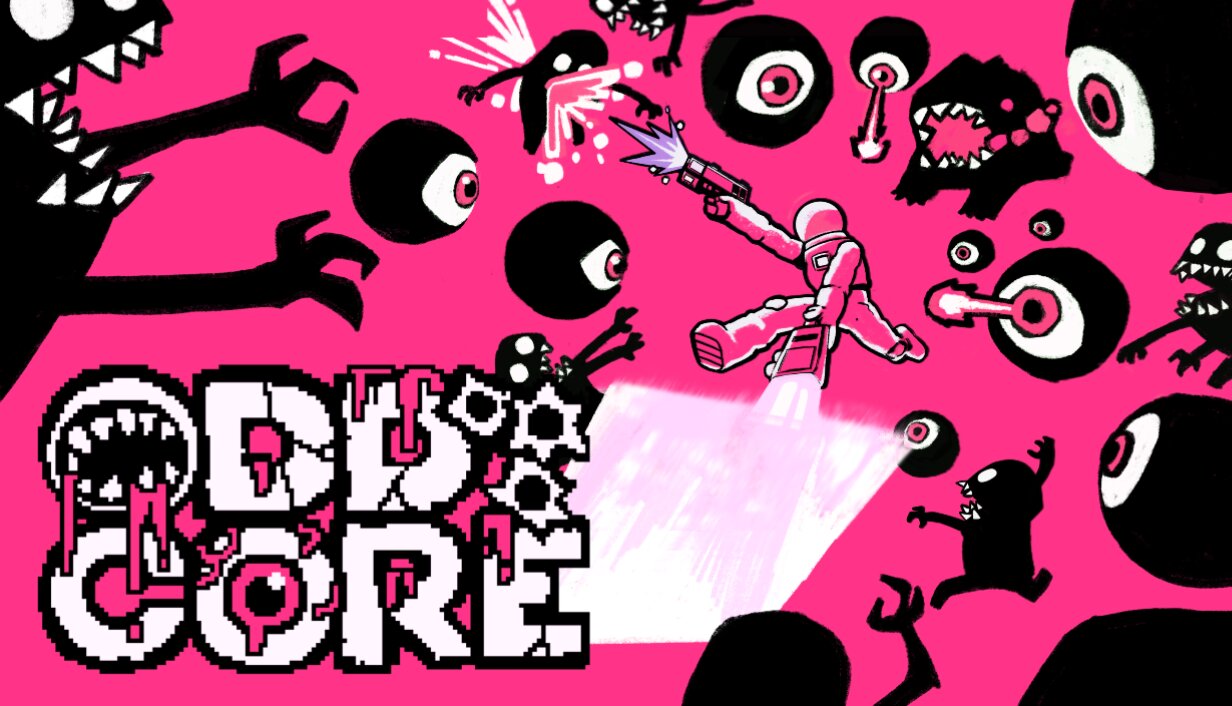
The Soul Economy — Mastering ODDCORE's Core Loop
A deep dive into ODDCORE's soul economy — the kill-earn-spend loop, shop tax escalation, and the strategic decisions that separate good runs from great ones.
ON THIS PAGE +
Every system in ODDCORE runs on souls. They’re your currency, your health potion, your time extension, and your score multiplier. Understanding the soul economy is the difference between a run that fizzles at minute three and one that pushes into the deep zones.
The Core Loop
Kill → Earn → Decide
That middle step is automatic. The third one is where runs are won or lost.
Every enemy you kill drops souls. Every soul you collect presents a choice: spend it now, save it for later, or convert it into survival. There is no passive income. There is no interest rate. The only way to earn is to fight.
Where Souls Go
The Portal Shop
Mid-run, you can warp to a shop dimension to spend souls on upgrades. Health, damage, attack speed, gadget enhancements — the shop has what you need. The timer does not pause while you shop. Every second browsing is a second not earning.
The Tax: Each shop visit increases purchase costs. Your first visit is cheap. By your third or fourth, prices have climbed noticeably. This escalation is the key tension — do you visit often and pay more per item, or do you save visits and risk running under-upgraded?
The optimal pattern depends on your run, but here’s a general principle: visit early when tax is low, buy the most impactful upgrade available, and resist the urge to window-shop.
Emergency Healing
Souls can be converted to health mid-combat through ODDCORE’s signature mechanic: shooting your own feet. It sounds absurd. It is absurd. It’s also a legitimate survival tool.
When you’re low on health and surrounded, burning souls for HP can keep a run alive. But every soul spent on healing is a soul not spent on upgrades or time. It’s a desperation move with real cost.
Time Extension
The 5-minute timer can be extended by spending souls. More time means more rooms cleared, more enemies fought, more souls earned. But the cost scales — early extensions are cheap, late ones are expensive.
The decision framework: extend time when you’re strong enough to earn back the cost and then some. If you’re limping through rooms barely surviving, buying time just delays the inevitable.
Soul Capacity
Your maximum soul storage increases as you clear areas. Push deeper into the run and your wallet grows. This creates a natural acceleration — early zones have low caps, limiting how much you can save. Later zones let you stockpile for big purchases.
This means the first few rooms are about immediate spending (cheap shop visits, early upgrades), while later rooms shift toward accumulation and strategic investment.
The Math of Risk
Every run presents a series of micro-decisions that compound:
- Room A has a corruption that blocks shop access. Do you enter it knowing you can’t spend for a while?
- You have enough souls to buy a damage upgrade OR extend time by 30 seconds. Which has more expected value?
- The shop tax is at 3x. Is it worth visiting for a health upgrade, or should you rely on the foot-shooting mechanic?
- You’re at 80% soul capacity. Do you push to a harder room for the cap increase, or play safe?
There’s no universal answer to any of these. That’s the point. The soul economy rewards situational awareness and punishes autopilot.
Advanced Patterns
The Early Dump: Visit the shop on your first opportunity, buy the cheapest meaningful upgrade. Tax is at 1x, prices never get lower.
The Hoarder: Skip the shop entirely until you’ve cleared 3-4 areas and maxed your soul cap. One big shopping trip at higher tax but with better upgrade options available. High risk if you die before spending.
The Bleeder: Never visit the shop. Spend all souls on time extensions and healing. Pure survival mode. Not optimal, but occasionally necessary when the corruption locks you out.
The Gambler: Visit the shop frequently, accept the tax, bet on upgrades compounding faster than costs escalate. Works when the upgrade pool favors you. Collapses when it doesn’t.
The Takeaway
The soul economy isn’t a system you master once — it’s a system you read and react to every run. The best runners aren’t the ones with the fastest aim (though that helps). They’re the ones who make the right spend/save decision twelve times in a row under a ticking clock.
That’s what makes ODDCORE tick. Pun intended.